
Let’s take a deep breath together.
In a world that often glorifies speed and productivity, healing can feel like an afterthought. We’re taught to push through stress, numb pain, and “get over it” rather than slow down and listen to what our bodies are really saying.
But sometimes, the mind, body, and spirit whisper in ways words can’t reach—and that’s where Reiki healing comes in.
Reiki healing isn’t about forcing change. It’s about allowing it.
It’s a gentle, non-invasive practice that invites balance back into your energy system—helping you release emotional tension, calm the nervous system, and reconnect with your own inner peace. Whether you’re navigating anxiety, grief, burnout, or simply craving more calm in your day-to-day life, Reiki offers a space for stillness, awareness, and restoration.
Let’s explore what Reiki healing is, how it works, what happens during a session, and how it can complement therapy to support your emotional and spiritual wellbeing.
What is Reiki and how does it work?
The word Reiki (pronounced “ray-key”) comes from two Japanese words: “Rei,” meaning “universal life,” and “Ki,” meaning “energy.” Together, Reiki translates to “universal life energy.” It’s based on the idea that this life force flows through all living beings—and when that energy is blocked, disrupted, or depleted, we experience physical or emotional imbalance.
Reiki healing works by gently channeling this universal energy through the practitioner’s hands into your energy field. It’s not a massage or manipulation of muscles.
Instead, it’s a deeply relaxing experience often described as warmth, tingling, or light pulsing sensations. Some people even report feeling waves of peace or emotional release.
Science is still exploring the mechanics of Reiki healing, but what we do know is that it activates the body’s relaxation response—lowering stress hormones, slowing the heart rate, and improving circulation. Think of it as hitting “reset” for your nervous system. When your body moves from “fight or flight” into “rest and restore,” natural healing processes begin to take over.
At its core, Reiki healing encourages harmony between the physical, emotional, mental, and spiritual layers of your being. It doesn’t treat symptoms in isolation—it restores flow and balance to the whole person.
What happens during a Reiki healing session?
If you’ve never experienced Reiki healing before, imagine walking into a calm, softly lit space that immediately feels like an exhale.
You’ll usually lie down fully clothed on a treatment table (or sit in a comfortable chair if you prefer). The practitioner may play gentle music or use aromatherapy to help you relax.
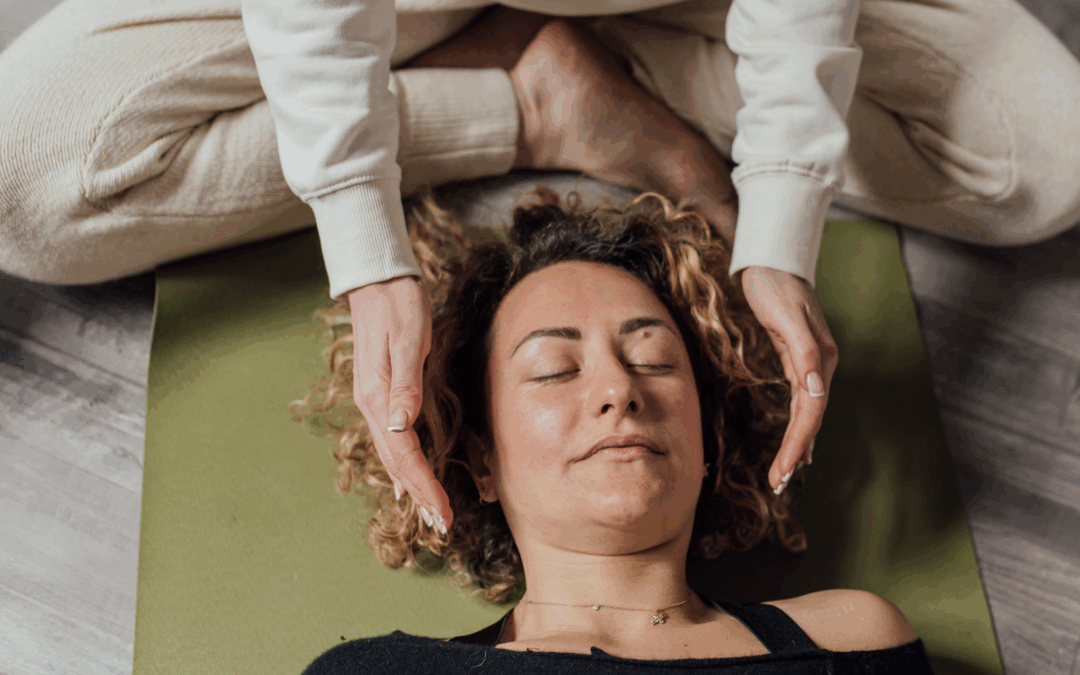
Once the session begins, they’ll place their hands lightly on or just above specific points on your body—often starting at the head and moving toward the feet. There’s no pressure or physical manipulation, only stillness and presence.
Each hand position is held for several minutes as the practitioner channels energy. Some people drift into a meditative state; others may fall asleep. You might feel warmth, tingling, or subtle sensations of movement within your body. You might also feel nothing at all—and that’s perfectly okay. Reiki healing works regardless of whether you consciously feel it.
Emotions can surface during or after a session. Tears, laughter, or sudden memories are common signs that energy is shifting and releasing. It’s not unusual to feel lighter or more centered afterward, as if a weight you didn’t know you were carrying has gently lifted.
After a Reiki healing session, it’s important to drink water, rest, and give yourself time to integrate. Many people describe a deep sense of peace, mental clarity, and improved sleep in the days that follow.
What is the drawback of Reiki?
Reiki healing is incredibly gentle, but it’s not a magic fix or a replacement for medical or psychological care. Its main “drawback” lies in misunderstanding what it’s meant to do.
Reiki doesn’t diagnose or cure illness—it supports your body’s natural ability to heal. That means results vary from person to person. Some may feel immediate relief, while others notice more subtle, gradual shifts over time.
Because Reiki healing works on an energetic level, it can also bring buried emotions to the surface.
This isn’t a bad thing—it’s part of the healing process—but it can feel uncomfortable. Old memories, sadness, or fatigue might appear as your system recalibrates. Working with a trained practitioner who understands emotional release can help you process this safely.
Another consideration is that the Reiki field isn’t as tightly regulated as clinical therapies. So, it’s important to choose a certified practitioner with reputable training and experience, especially if you’re using Reiki healing to complement therapy or medical treatment.
When practiced responsibly and ethically, Reiki is safe for people of all ages—including children, pregnant individuals, and those undergoing medical care.
How Reiki healing and therapy work together
Reiki healing and therapy often go hand in hand.
While therapy helps you explore and process thoughts, emotions, and patterns through language, Reiki helps you release the energetic charge those experiences leave behind in the body.
For example, imagine you’re working through anxiety or trauma in therapy. You might intellectually understand your triggers—but your nervous system still responds with tension, heart racing, or restlessness. Reiki healing supports this process by helping the body feel safe again.
It calms the stress response, allowing you to access deeper layers of emotional regulation. In therapy sessions, you might find it easier to reflect, open up, or integrate insights without feeling overwhelmed.
Here’s how Reiki healing complements therapy in a holistic way:
- Nervous system regulation: Reiki helps bring the body into a state of calm, making it easier to engage in talk therapy without reactivating stress or trauma responses.
- Emotional release: Sometimes, feelings that words can’t express are stored as energetic tension. Reiki helps release those blocks gently and safely.
- Mind-body awareness: Reiki encourages mindfulness and self-connection—qualities that enhance therapeutic insight and emotional clarity.
- Integration: After intense therapy sessions, Reiki healing can help integrate new awareness by grounding and soothing the body.
Many therapists and holistic practitioners collaborate to create integrative care plans. You might see a therapist weekly while receiving Reiki once or twice a month to support your emotional and physical balance. Together, they form a bridge between mind-based understanding and body-based healing.
What religion does Reiki come from?
Reiki healing is often associated with spirituality, but it’s not tied to any specific religion. Its roots trace back to Japan in the early 20th century, founded by Mikao Usui, a Buddhist monk and teacher. Usui developed Reiki as a spiritual practice focused on self-healing, compassion, and balance—principles that align with universal human values rather than religious doctrine.
While Reiki draws on Eastern philosophies about life energy (similar to “Chi” in Chinese medicine or “Prana” in yoga), it’s inherently inclusive. People of all faiths—or none at all—can practice and receive Reiki healing.
Today, Reiki practitioners around the world come from diverse backgrounds: Christian, Muslim, Jewish, Buddhist, agnostic, and more. The common thread isn’t belief, but intention: to facilitate healing, peace, and balance.
Reiki healing doesn’t ask you to believe in anything outside yourself. It simply invites you to reconnect with your own inner energy—the part of you that knows how to rest, restore, and realign.
Final Thoughts: Healing through presence and energy
Reiki healing reminds us that true wellness isn’t just the absence of illness—it’s the presence of balance. It invites us to slow down, breathe, and listen to what our bodies and spirits need.
In a culture that often equates worth with productivity, Reiki offers a gentle rebellion. It says: you are allowed to rest. You are allowed to receive. You are allowed to heal.
When combined with therapy, Reiki healing becomes even more powerful—bridging the space between mind and body, thought and feeling, story and sensation. It helps you not only understand your healing but embody it.
Whether you’re curious about energy work or simply seeking a deeper sense of calm, Reiki healing offers a path back home to yourself—one breath, one heartbeat, one session at a time.
You don’t have to do it all alone. Healing is not a destination; it’s a relationship—with yourself, your body, and the energy that connects us all.
You are energy. You are light. And you are capable of healing.
Get Started
You may call, text message, email, or fill out the form to reach us. We will respond within 48 hours, Monday through Friday.
We Will Help You Find Your Fit
We know that looking for a counselor can feel overwhelming.
We are here to help guide you to the counselor that is best for your needs. If that counselor turns out to
not be in our practice, that's okay. We know great counselors that we'd be happy to refer you to.
What’s most important to us is that you get connected with the help you need. We are here for you.